BlockBlast100
Big Block Blast
Big Block Blast
Big Block Blast
Big Block Blast
Big Block Blast

Big Block Blast

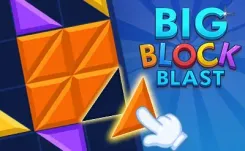
Big Block Blast is a mobile puzzle game where players drag shapes onto an 8x8 grid to form 2x2 squares that clear from the board and earn points. Players manage three shapes at a time and place all three before new ones appear. Strategic spatial planning determines success as the grid fills quickly with each move.

Game Details

  • PlatformBrowser (desktop, mobile, tablet)
  • TechnologyHTML5 (Unity WebGL)
  • Release Date2024
  • Last Updated2024

What Is Big Block Blast and How Does It Work?

What Is Big Block Blast and How Does It Work?

Big Block Blast is a puzzle game that challenges you to drag and place tangram-like shapes — built from triangles and squares — onto an 8x8 grid. You're given three blocks simultaneously, and you must place all three before new ones appear. The core objective is forming 2x2 squares called "Big Blocks," which clear from the board and earn you points.

What makes this big block blast game strategically demanding is its chain-reaction scoring system. Color-matched Big Blocks trigger multipliers, while larger cleared rectangles generate higher point values. The game ends when none of your three available shapes fit anywhere on the remaining grid.

You can play free online across multiple platforms, eliminating any barrier to entry. However, don't expect a casual experience — difficulty escalates with every placement.

Unlike a block blast solver that removes the thinking, this game forces you to balance immediate clearing with long-term spatial planning. Understanding scoring methods and progression is essential for new players looking to improve their overall gaming experience.

Where to Play Big Block Blast on Any Device

Where to Play Big Block Blast on Any Device

You can access Big Block Blast directly through web browsers without downloading anything, making it immediately playable on desktop and laptop devices.

If you prefer mobile gaming, you'll find dedicated apps on both the Apple App Store and Google Play Store for iOS and Android devices.

The offline-compatible version gives you the added advantage of playing without an internet connection, ensuring the game remains accessible regardless of your connectivity situation. Students can also access the game at school through unblocked game platforms that are designed to bypass typical network restrictions and firewalls.

Play on Web Browsers

There are several ways to access Big Block Blast directly through a web browser, making it one of the more flexible puzzle games regarding availability. You can play on blockblast100.com or find block blast unblocked versions through dedicated gaming sites that bypass institutional restrictions.

These browser-based options eliminate download requirements, letting you jump into gameplay immediately on any device with an internet connection.

Browser versions retain the core block blast mechanics, including the 8x8 grid, three-piece placement system, and Big Block completion objectives. Performance varies depending on your browser and connection speed, so Chrome or Firefox typically delivers the smoothest experience.

If your workplace or school network restricts gaming sites, searching specifically for block blast unblocked versions gives you reliable alternative access points worth bookmarking.

Download the Mobile App

Download Big Block Blast directly from the Apple App Store on iOS or Google Play Store on Android to get the most stable, optimized version of the game on your mobile device.

Both versions offer full access to core mechanics, including block placement, Big Block combinations, and power-up features.

The mobile app also supports offline play, meaning you don't need a constant internet connection to enjoy sessions. This makes it practical for commuting or travel.

However, note that advertisement-based features, such as gaining access to additional special blocks, require connectivity to function properly.

Compared to browser-based play, the mobile version delivers better touch responsiveness and a more consistent experience overall.

If you're committing to Big Block Blast long-term, downloading the dedicated app is clearly the stronger choice.

Offline Play Options

Offline play extends the flexibility already offered by the mobile app, letting you enjoy Big Block Blast without any internet connection. A dedicated offline-compatible version supports uninterrupted gameplay, making it practical for commutes, travel, or low-connectivity environments.

This matters more than it might initially seem. Many puzzle games silently require background data for ads, leaderboards, or updates, disrupting your session unexpectedly. Big Block Blast's offline mode eliminates that friction.

However, there's a trade-off worth noting: advertisement-based perks, including accessible special blocks, likely won't function without connectivity. You'll retain core mechanics but may lose access to certain power-up opportunities.

If maximizing strategic options matters to you, staying connected when possible still offers a measurable advantage over pure offline play.

How the Big Block Blast Grid Actually Works

How the Big Block Blast Grid Actually Works

At the heart of Big Block Blast lies an 8x8 grid that dictates every decision you'll make. Every placement either opens or closes future opportunities, so understanding how the grid functions isn't optional—it's essential.

Every placement shapes what comes next—on an 8x8 grid where understanding the mechanics isn't optional, it's essential.

The grid operates on three critical principles:

  • Spatial accountability: Every square you fill reduces your remaining options, making each placement a calculated trade-off.

  • Clearing mechanics: Completed 2x2 Big Blocks vanish immediately, restoring grid space and enabling chain reactions.

  • Shape compatibility: Pieces include standard squares, multi-square spans, and diagonal-edged shapes, each demanding precise spatial awareness.

You're always managing three simultaneous pieces, and all three must land before new shapes arrive. This constraint forces you to think several moves ahead rather than reacting impulsively.

As the grid fills, your margin for error shrinks dramatically. Recognizing available patterns early separates strategic players from those who simply place pieces and hope for the best. Similar block-based puzzle games use this same 8x8 grid structure as the foundation for building increasingly complex spatial challenges.

The Three-Shape Rule and Why It Changes Everything

The Three-Shape Rule and Why It Changes Everything

At any given moment, you're working with exactly three shapes simultaneously, and you can't receive a new set until you've placed all three on the grid.

This constraint forces you to evaluate each shape not in isolation but as part of an interdependent trio, where placing one piece poorly can make the remaining two impossible to fit.

You're never just making a single move—you're orchestrating a sequence, and that distinction separates players who score consistently from those who hit a wall early. The game is played on an 8x8 grid containing 64 total spaces, meaning every placement decision carries real weight across a finite and unforgiving board.

Three Shapes, One Decision

Three shapes sit before you at all times in Big Block Blast, and that singular constraint reshapes every decision you make. You can't cherry-pick favorites — all three must be placed before the next set arrives. That requirement forces you to evaluate each shape not in isolation, but as part of an interdependent sequence.

This dynamic demands you consider:

  • Placement order — which shape lands first directly affects where the remaining two can go

  • Space preservation — placing one piece carelessly can strand the other two

  • Board geometry — each shape's footprint must harmonize with the others collectively

You're not solving three separate problems. You're solving one compound problem with three variables. That distinction separates reactive players from strategic ones.

No Shape Left Behind

This constraint forces a critical shift in thinking. You stop evaluating each piece independently and start reading them as a set. One shape might slot perfectly near your developing Big Block, but if placing it there traps the second or third shape, you've gained nothing.

The rule punishes reactive play and rewards forward thinking. You must visualize not just where each piece fits, but how all three placements interact — because a partial solution is no solution at all.

Planning Your Next Move

Every move in Big Block Blast is actually three moves, and that distinction reshapes how you approach the board entirely. You're not placing one shape — you're committing to a sequence. Before touching the grid, evaluate all three pieces together and identify how they interact spatially.

Ask yourself:

  • Does placing piece one create room for piece two, or eliminate it?

  • Can all three pieces form a 2x2 Big Block collectively?

  • What board space survives after all three placements?

Failing to think sequentially turns individual smart moves into collective dead ends. The three-shape rule forces you to treat each placement as interdependent, not isolated.

That mental shift — from reactive to anticipatory — separates players who survive escalating difficulty from those who don't.

How to Create Big Blocks and Clear the Board

How to Create Big Blocks and Clear the Board

Mastering Big Block Blast requires understanding how its core clearing mechanic works: you must arrange placed pieces so that they form complete 2x2 squares, called Big Blocks, which then vanish from the board and free up critical grid space.

Every placement decision should work toward completing these formations rather than simply filling empty spots.

Color coordination matters greatly here. When all four squares within a Big Block share the same color, you trigger bonus points and chain reactions that multiply your score. Larger rectangular or square formations beyond 2x2 earn even greater point values, so you should prioritize building those when the opportunity arises.

Matching colors within your Big Blocks triggers chain reactions and bonus points, so always chase those larger formations.

The board clears only through deliberate construction, not passive filling. If you're placing pieces without a Big Block target in mind, you're accelerating the game's end.

Treat every move as a contribution toward a specific clearing goal, and you'll maintain manageable grid space far longer. Similar hybrid puzzle games combine block-placement mechanics with number merging systems, where matching values on a grid create progressively higher numbers while players work to prevent the board from filling completely.

How Color Matching Triggers Chain Reactions and Big Points

When you match colors within a single Big Block, you earn bonus points beyond the standard clearing reward, making color coordination a critical layer of strategy.

These color-matched completions don't just pad your score — they trigger chain reactions that multiply your point gains across consecutive clears.

You'll quickly find that deliberately engineering color-matched Big Blocks separates high-scoring runs from average ones, as the multiplier effects compound rapidly with each successful chain.

Color Matching Bonus Points

Color matching in Big Block Blast isn't just a cosmetic reward—it's the game's core scoring engine. When you fill a 2x2 Big Block using pieces of the same color, you trigger multiplier effects that dramatically increase your point total. Understanding how this system works gives you a measurable competitive edge.

The key mechanics you need to master:

  • Same-color Big Blocks activate bonus point thresholds beyond standard completion rewards

  • Chain reactions occur when multiple color-matched blocks clear simultaneously, stacking multipliers

  • Larger formations beyond 2x2, like rectangles or bigger squares, amplify color-match bonuses further

You shouldn't treat color as secondary to placement. Prioritizing color alignment while filling the grid is what separates high-scoring runs from average ones.

Chain Reaction Multiplier Effects

Chain reactions are where Big Block Blast's scoring system shifts from incremental to exponential. When you complete a color-matched Big Block, it doesn't just vanish — it triggers adjacent matches, creating cascading clears that multiply your points rapidly.

Each successive reaction compounds the multiplier effect, meaning a single well-placed piece can ignite a scoring sequence far exceeding what individual placements would generate.

You'll notice the difference immediately: a standalone Big Block yields modest points, but a chain reaction can dwarf that total within seconds.

This mechanic rewards deliberate setup over reactive placement. You're not just filling space — you're engineering sequences. The critical distinction is that chain reactions require premeditation.

You must position pieces anticipating future matches, not just current ones, or the multiplier potential dies with a single misplaced block.

What Glowing Blocks and Power-Ups Actually Do

Big Block Blast offers two distinct power-up mechanics that meaningfully alter how you interact with a filling grid.

Glowing blocks are stackable, meaning you can place them directly on top of existing pieces. This matters most when your grid is nearly full and standard placement is no longer viable.

Free placement blocks remove positional restrictions entirely, letting you drop a piece anywhere regardless of surrounding conditions.

Each mechanic serves a specific strategic purpose:

  • Glowing blocks extend your placement window by layering onto occupied squares rather than requiring open space

  • Free placement blocks bypass spatial constraints, giving you precise control over where a piece lands

  • Advertisement-unlocked blocks provide additional power-ups, trading your time for extended gameplay opportunities

Neither power-up eliminates the underlying pressure of a filling board. They're tools, not solutions.

Using them without a clear plan wastes their advantage, so you'll want to deploy them deliberately rather than reactively. Similar block puzzle games often reward players who think ahead by arranging block shapes to clear space before the grid becomes unmanageable.

Why Big Block Blast Gets Harder With Every Move

Power-ups buy you time, but they don't change the game's underlying architecture—and that architecture is designed to work against you. Every move you make tightens the board's constraints. Placing a block doesn't just fill space; it reshapes which future pieces can land without creating dead zones.

The difficulty isn't random. It scales deliberately with each successful placement, meaning your progress actively accelerates the challenge. As the grid fills, your margin for error shrinks. You're no longer just placing pieces—you're managing a narrowing set of viable configurations.

The diagonal edges on certain blocks compound this pressure. Unlike standard grid puzzles, diagonal cuts create awkward residual spaces that standard shapes can't fill cleanly. You'll find yourself cornered not by bad luck but by earlier decisions that seemed reasonable at the time.

Big Block Blast punishes short-term thinking. Every placement either builds flexibility or quietly eliminates it. This is a concept familiar to players of block-placement puzzle games, where managing spatial constraints across the entire grid is often the difference between a winning and losing position.

Beginner Strategies to Survive Your First Few Rounds

Surviving your first few rounds comes down to one discipline: resist the urge to place pieces wherever they fit and start thinking about what each placement leaves behind. Every move either builds toward a Big Block or fragments your grid into unusable gaps.

Prioritize these habits immediately:

  • Cluster toward corners and edges first — open center space stays available longer, giving you flexibility with awkward shapes later.

  • Always visualize the 2x2 completion — place pieces with the next Big Block already mapped out, not just the current one.

  • Never ignore color alignment — matching colors within your Big Block triggers multipliers that sustain your score through difficult stretches.

You'll also need to remember that all three shapes must be placed before new ones arrive. Holding space for the third piece is a critical discipline beginners consistently overlook.

If you enjoy grid-based puzzle games that reward spatial thinking, it's worth exploring hexagonal game formats where piece orientation and board geometry create an entirely different layer of strategic challenge.

Strategic patience separates survivors from players who run out of room by round three.

Common Mistakes That End Your Game Too Soon

Most games don't end because of a single catastrophic move — they end because of a series of small, avoidable errors that quietly accumulate until the grid locks up. Recognizing these patterns early separates struggling players from consistent ones.

The most damaging mistake is cornering large pieces too early, leaving fragmented spaces that no subsequent piece can fill.

Cornering large pieces early is the fastest way to fragment your board beyond any possible recovery.

You'll also hurt yourself by ignoring the three-piece constraint — forgetting that all three current shapes must be placed before replacements arrive forces panicked decisions under pressure.

Another critical error is chasing color bonuses at the expense of spatial efficiency.

Prioritizing aesthetic matches over structural placement leaves awkward gaps that compound quickly. You're fundamentally trading long-term board health for short-term points.

Finally, neglecting the center grid is fatal.

Players who cluster pieces along edges consistently run out of flexible placement options faster, accelerating the game's end unnecessarily. Using a Block Blast Solver can help you identify these spatial inefficiencies by analyzing your current board layout and recommending optimal piece placements before mistakes become irreversible.

Big Block Blast: Frequently Asked Questions

Based on available information, Big Block Blast doesn't appear to offer multiplayer or competitive modes against other players.

You're focused entirely on a solo puzzle experience, where you'll place shapes, complete Big Blocks, and chase high scores independently. The game's design prioritizes individual spatial reasoning and strategic block placement.

If competitive play matters to you, you'd need to compare scores informally, as no built-in player-versus-player functionality is documented.

Big Block Blast's pause and resume functionality largely depends on the platform you're playing on.

On mobile versions, you can typically background the app and return without losing progress.

Web-based versions may vary, as browser refreshes can reset your session.

The offline-compatible version offers more reliable progress retention.

You'll want to avoid closing the app entirely, as that's most likely to wipe your current game state.

Big Block Blast doesn't carry strict age restrictions, but it's typically rated for ages 4+ or Everyone across app stores, making it accessible to a broad audience.

You'll encounter mild advertising, which parents should consider for younger players. The game's puzzle mechanics don't contain violence or inappropriate content, though in-app purchases and ad-viewing features warrant parental oversight when children are playing.

Based on available information, Big Block Blast doesn't require an account or login to play. You can jump straight into gameplay across web browsers, mobile apps, and its offline-compatible version without registering. This accessibility removes barriers to entry, making it convenient for casual players.

However, creating an account might grant access to features like score tracking or progress saving, so you'll want to check platform-specific options for additional functionality.

Big Block Blast is free to play, but it's not entirely without monetization. You'll encounter ads during gameplay, and while you can watch advertisements to gain access to additional special blocks, that's the trade-off for free access.

The game's core mechanics—placing shapes, clearing Big Blocks, and earning points—don't require purchases. However, if you're seeking an uninterrupted experience, you might find the ad-based model somewhat intrusive.

Big Block Blast – BlockBlast100